MH Safe relies on the Stigma Spotlights approach to achieve large-scale, efficient, and effective approaches to addressing mental illness stigma and discrimination. (This system was originally documented in an article entitled “Shining Infinite Spotlights: Scalable, Comfortable Day-to-Day Systems for Addressing Omnipresent Stigma” and has been expanded upon since then).
The Stigma Spotlights model is a systemic approach for stopping potentially inappropriate practices that mistreat parties who may have mental illnesses and other disabilities. These issues are often reflected in problematic policies or published guidance, which may be reported to the Mental Health Safe Project openly or anonymously via forms available at www.mhsafe.org and www.disabilityradar.com.
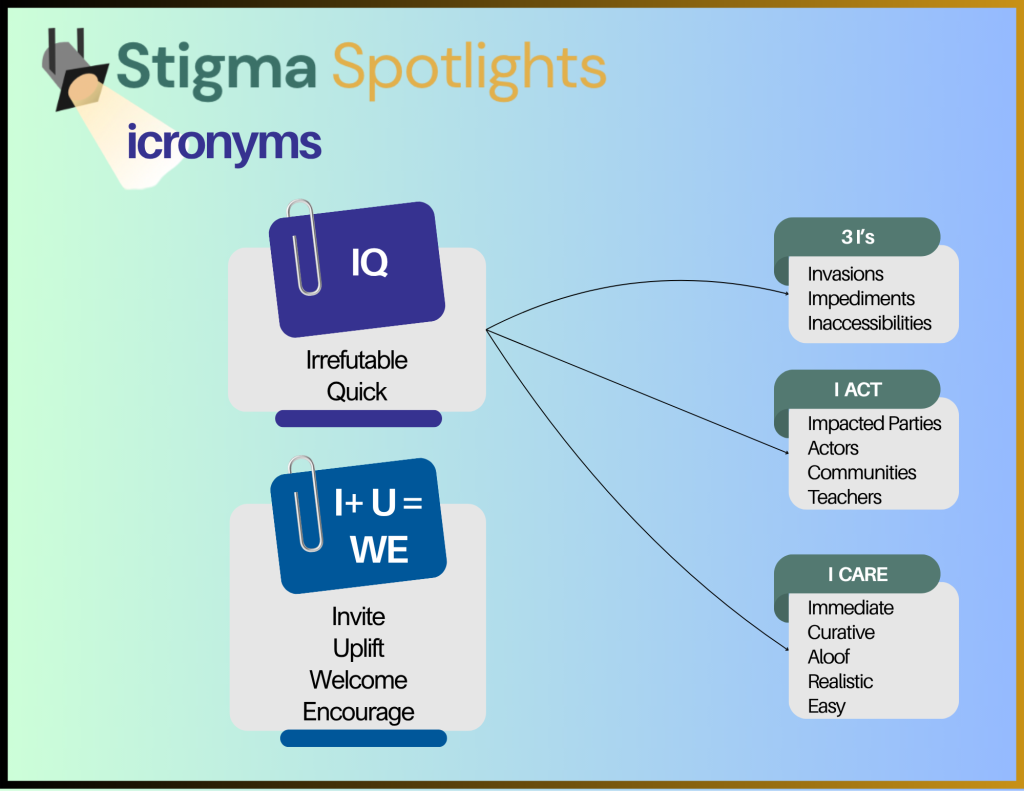
The Stigma Spotlights components are broken down into several acronyms that all start with the letter “i” so together they are referred to as the Stigma Spotlight “icronyms,” as described below.
When any matter is put into the Stigma Spotlights model to consider a possible education or advocacy campaign or other mitigation effort, the following inquiries occur:
IQ
Which Campaigns Should Be Prioritized?
Any possible Stigma Spotlight initiative is evaluated to assess if the claim is irrefutable and the intervention can be quick. The higher the assessed IQ is, the higher the priority for launching a project, with the logic being that it will have a higher chance of making an impact.
This IQ assessment is in part based on three other icronyms:
3 I’s
(What Are Possible Problems?)
The Stigma Spotlights approach looks at three key types of problems (the 3I’s): invasions of privacy, impediments to access, communication, and participation, and inaccessibilities to disability needs and accommodation requests. (These are described in more depth at www.mhsafe.org/addendum, where there are also addendum resources to help people learn ways to prevent and address these issues).
I ACT
(Who Is Affected?)
A single problematic policy, publication, or practice can have lots of ripple effects. The Stigma Spotlights I ACT approach explores how the potential problem may be affecting impacted parties directly affected by the practice, actors who are engaging in the practice, communities connected to it, and teachers who may play a role in providing alternative education to stop the spread of problems. After considering all of these stakeholders, Stigma Spotlights may end up designing campaigns to reach all of them with support resources.
I CARE
(Which Responses Will Be Most Empowering?)
Sometimes solutions can create more problems, because speaking up about an issue can create stress. Think of a sexual harassment victim who has painful conversations with their support system, human resources, or attorney and then has to endure a protracted legal ordeal including possible public stigma and fallout from being associated with the matter, as well as facing possible attacks on their credibility and personal history. Many people choose not to come forward because of the burdens of trying to address the issue, which compound the pain and trauma and harms from the actual harassment.
The I CARE approach from Stigma Spotlights checks in to ensure any interventions will be immediate rather than protracted, curative (meaning the problem is actually solved) rather than creating more problems, aloof (meaning the person does not have to invest a lot of time and energy) rather than draining, realistic rather than pursuing impossible idealistic outcomes, and easy rather than burdensome.
One common example of I CARE in practice is allowing people to make an anonymous report to MH Safe about problems at their organization, empowering MH Safe to start a Stigma Spotlight campaign that shares free extra resources to the I ACT parties. The report from the party is immediate, it is aloof because it transfers to MH Safe’s hands, and it is easy to do. The solution, of MH Safe providing extra free resources, is often more realistic in achieving improvements than many dispute processes which often even end in non-disclosure agreements that conceal problems. We might debate how curative the process is – does it really fix the problem, and will people really use the resources? However, providing this education and these tools gives the community a much larger chance of actually knowing how to prevent these problems in the future.
I + U = WE
How Can We Set The Stage for Collaboration?
MH Safe works hard to collaborate with organizations that may be motivated to address potential mistakes and problems. In 2025, this process was explained in “Collaborating Instead of Canceling: Seven ‘Mind Shifts’ for Dispute Resolvers” published in Alternatives to the High Cost of Litigation in March 2025 (an article that explores strategies to make people more likely to engage and collaborate on tough topics instead of leaving those conversations).
Stigma Spotlights still aims to pursue the I + U = WE model for engaging with organizations by inviting them to work on projects together, uplifting them by celebrating their strengths, welcoming them to work together, and encouraging them to keep it up. Assuming an organization seems like they might be open to collaboration, we will use this approach to engage them.
Some organizations do not prioritize communication and do not work to address problems flagged by Stigma Spotlights. They may simply be too busy or focused on other things to promptly address problematic materials even when they do seem to genuinely care about preventing mental illness stigma and discrimination. Others may be dismissive or defensive. Because of this possibility, the Stigma Spotlights approach begins by assigning any organization a REAL Score summarizing how promising a prospect they appear to be for collaboration and whether MH Safe will pursue collaborative mitigation projects or they will simply do an independent addendum campaign. If they do not seem to have the resources, engagement, awareness, and leadership that suggests they will collaborate MH Safe will launch an independent effort to share free resources.
Spotlight Templates
Mitigation Projects
To see templates and estimated timelines for four possible types of MH Safe mitigation projects, click here. To see some examples of MH Safe outreach efforts, click here to view a MH Safe Empowerment Outreach Chart.
REAL Scores
To see an example of the REAL Score, click here.